


LIFE BEYOND RUNWAYS
Through our demos, Direct Aviation is taking flight.
Upcoming Flight Demonstrations
We will continue to prove out city-to-city, point-to-point regional air travel in upcoming flight demos in Florida, the EU, and more. Stay tuned for details.

DIRECT AVIATION IN ACTION
Real flights. Different regions. One emerging network
Direct Aviation is not one route, one use case, or one kind of access point. Through our demos, Electra is proving the operating model across different regions and environments. This will build the operational, regulatory, and infrastructure foundation for a new kind of regional air travel.
Northeast Corridor
AUGUST 13-19, 2026
Connecting cities and access points across a congested regional corridor.
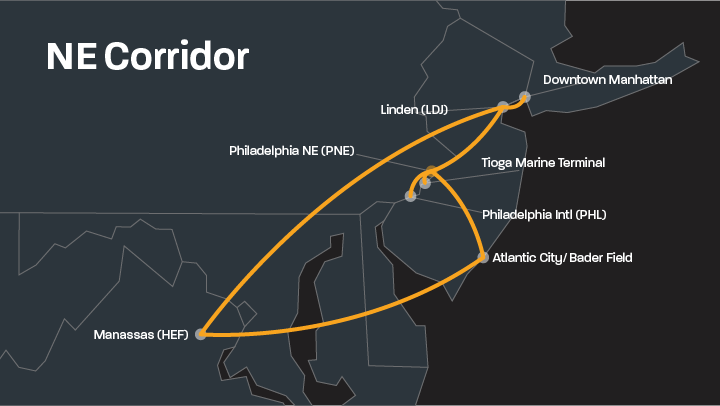
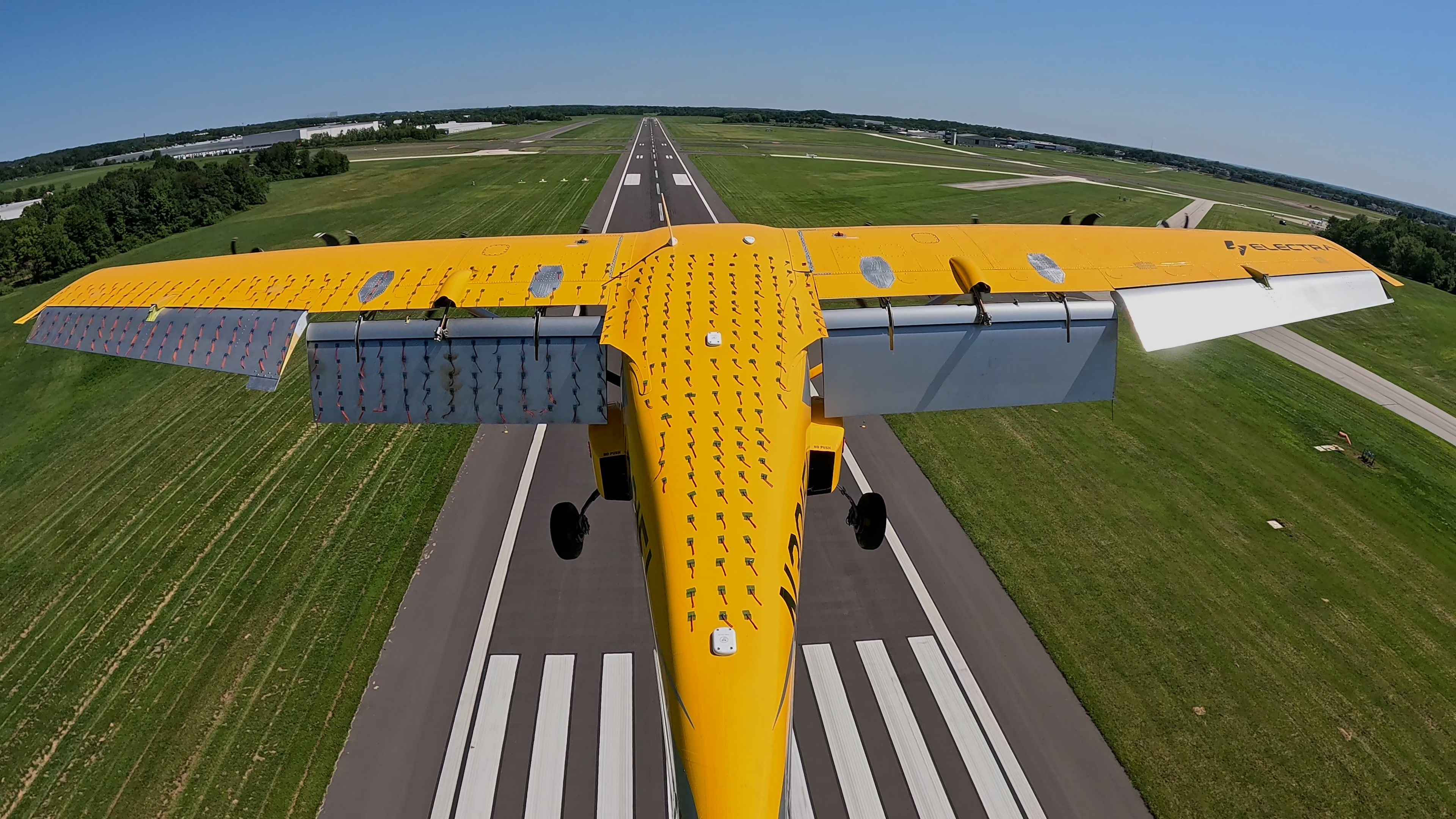
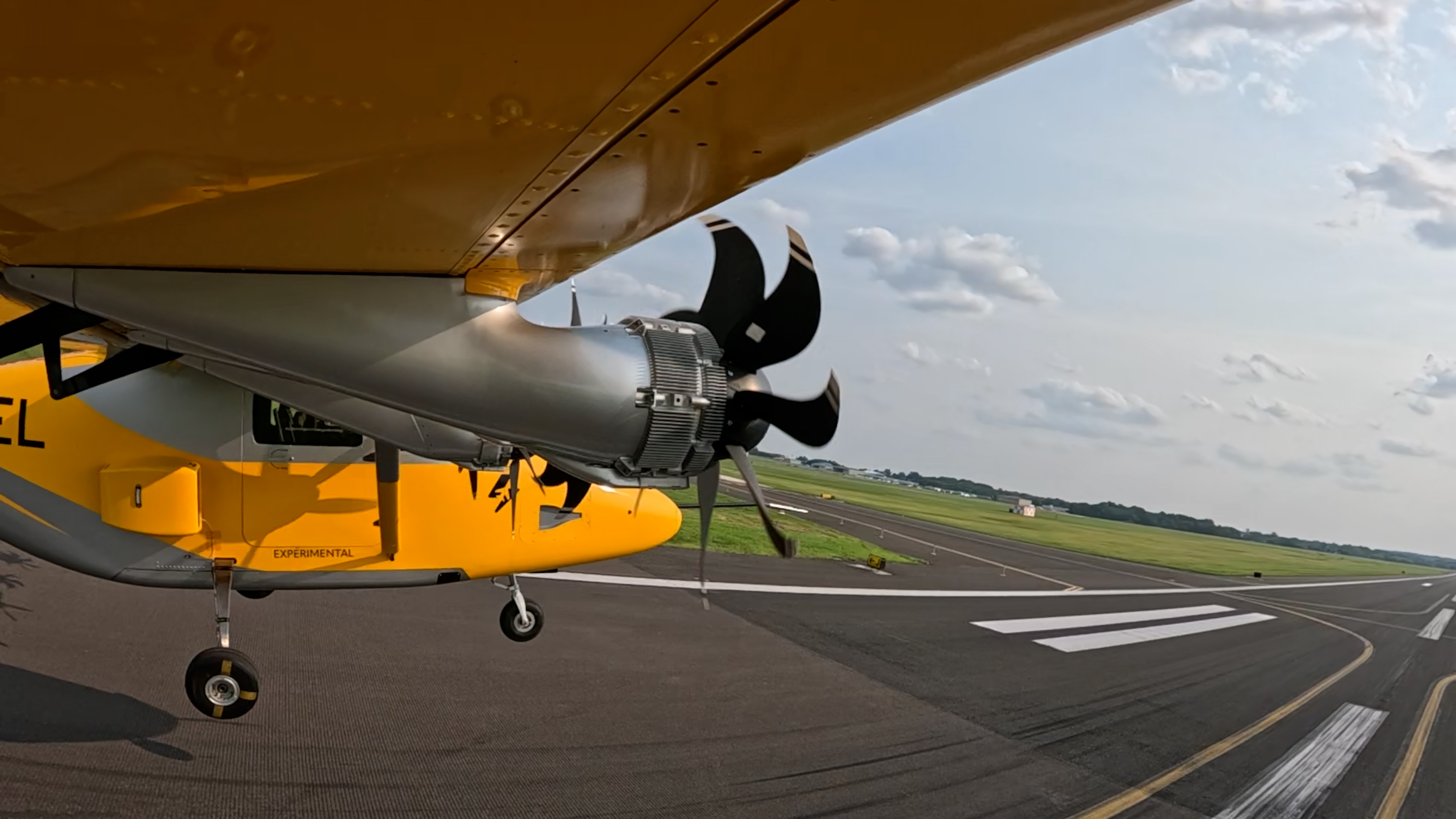
Across the Northeast Corridor, Electra connected conventional airports with entirely new kinds of aviation access points. Demonstrations linked the Washington region, Atlantic City, Philadelphia, northern New Jersey, and Manhattan. This showed the Ultra Short can create more direct regional connections without routing every trip through a traditional hub.

What was demonstrated.
NOVEL ACCESS POINTS
Operations at locations including Bader Field and Tioga Marine Terminal demonstrated how aviation can move closer to where trips actually begin and end.
MAJOR-AIRPORT INTEGRATION
Flights into Philadelphia International showed how the Ultra Short aircraft can integrate with a major hub while using their short-field performance to support efficient operations.
REGIONAL CITY-TO-CITY CONNECTIVITY
The network connected regional airports, urban access points, and major metropolitan areas — demonstrating the building blocks of true point-to-point regional travel.
Virginia
SEPTEMBER 1-4 & 16, 2026
Building the operating framework for a new regional aviation network.
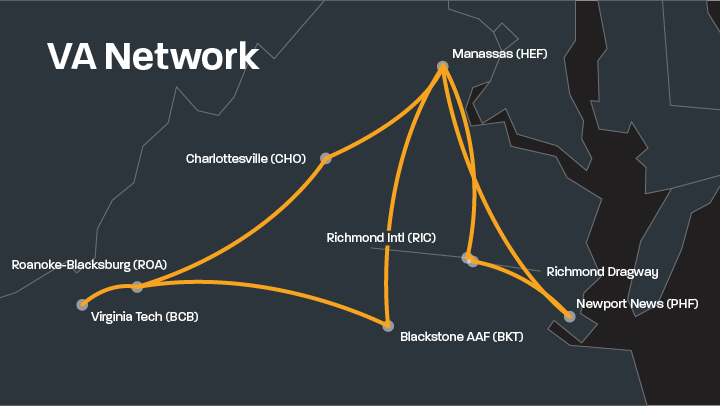
Across Virginia, Electra worked with government and aviation partners to test how the Ultra Short aircraft can use existing infrastructure in new ways. The demonstrations included operations from taxiways, ramps, heliports, vertipads, and regional airports while exploring procedures that can help Direct Aviation operate reliably within the existing national airspace system.



What was demonstrated.
FLEXIBLE AIRPORT OPERATIONS
The Ultra Short performance opens the possibility of using underutilized airport surfaces and compact access points, rather than relying exclusively on conventional runways.
NEW INSTRUMENT PROCEDURES
Point-in-Space and related instrument-routing demonstrations explored ways to enable predictable, efficient regional operations in a wider range of conditions.
COMMUNITY CONNECTIVITY
The flights connected smaller communities, regional airports, and larger metropolitan areas — showing how a regional network can extend the reach of existing aviation infrastructure.
WHAT THE DEMOS ARE HELPING PROVE
The elements of Direct Aviation are coming together.
Each demonstration answers a different question. Together, they show how the Ultra Short network can expand access, make better use of existing infrastructure, and connect communities in ways conventional aviation cannot easily serve today.
01
New and unexpected places can become aviation access points.
Former racing surfaces, ramps, taxiways, heliports, vertipads, and other small-footprint locations can bring aviation closer to passengers.
02
Local and regional airports can do more.
The Ultra Short can expand the role of existing general aviation infrastructure in passenger mobility without requiring a conventional airport buildout.
03
Major hubs can connect without adding runway demand.
The Ultra Short feeder service can connect regional passengers into large airports while creating new options for how aircraft enter, operate within, and depart busy airport environments.
04
New procedures can make the network practical.
The Virginia operations explored Point-in-Space procedures and instrument-routing concepts designed to support predictable, reliable service in varied operating conditions.
05
Different infrastructure can work as one network.
Novel access points, GA airports, commercial airports, and urban aviation facilities can function as connected parts of the same regional transportation system.
06
One aircraft can unlock an entire regional network.
The Ultra Short combines short-field access with the range, payload, and operating characteristics needed for city-to-city missions — not just short urban hops.
Direct Aviation means flying from where people are to where they want to go. The demos are helping turn that idea into an operating reality.

Never Miss an Update.
Subscribe to Our Newsletter.
Corporate Headquarters
10761 James Payne Court, Manassas, VA, 20110
© 2026 Electra Aero. All rights reserved.